The Krvarić Family Coat of Arms: History and Heritage
The 1561 Habsburg patent, the Ark of the Covenant, the dove, and what the Krvarić coat of arms means to me.
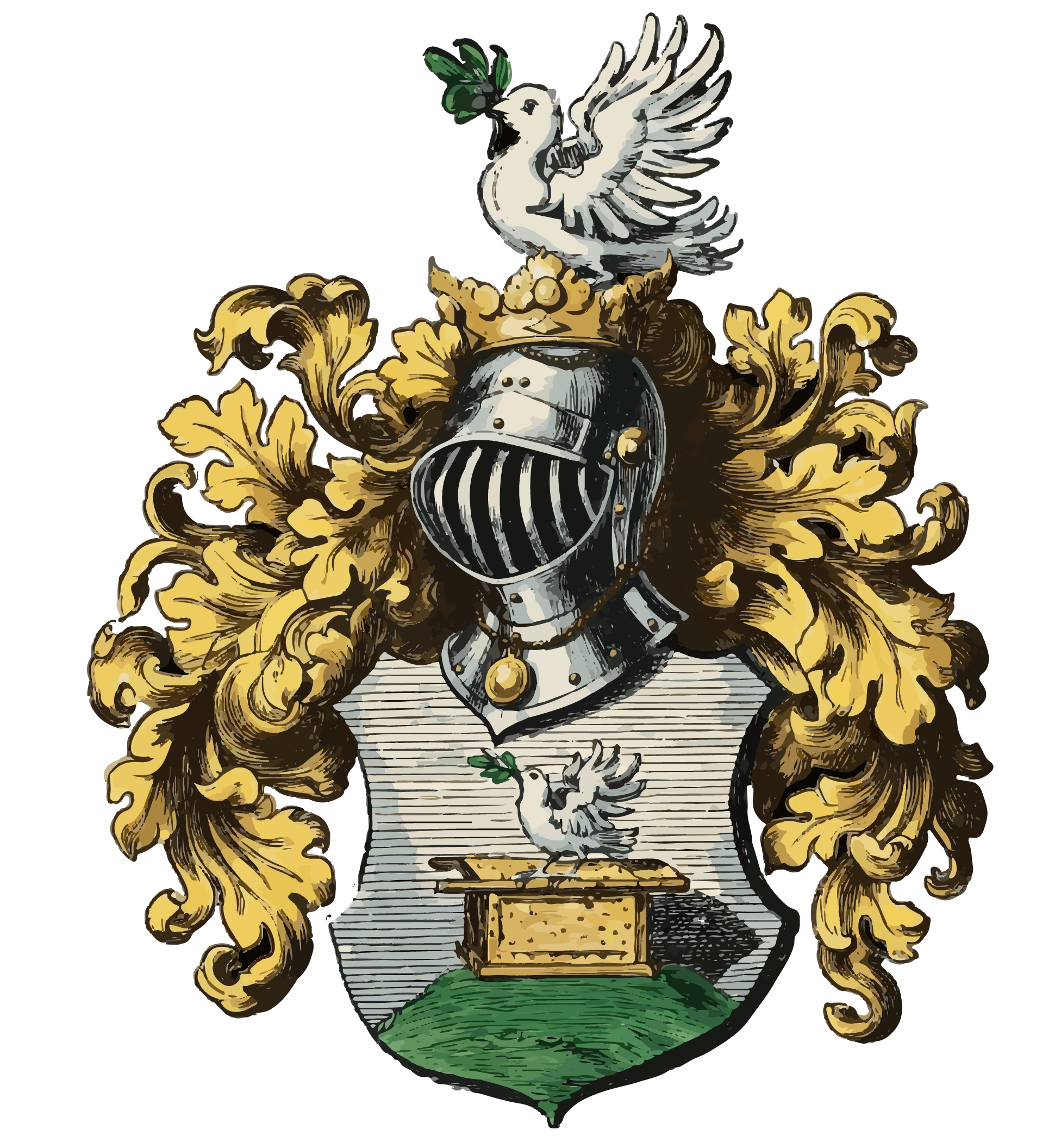
I am the son of immigrants, and I've always felt a strong connection to the European societies my family came from. In America, conversations about ancestry sometimes stop at “I'm a quarter Irish and three-quarters German,” or “I'm half Italian and half English.” People often don't know much more, or don't particularly care. I do.
Recently I started looking more seriously into the Krvarić coat of arms. I knew the image, but the historical records behind it were more interesting than I expected. They point to a family bearing our name in sixteenth-century Habsburg Croatia, and to a royal patent dated July 30, 1561. There is a real history here worth understanding.
A royal patent in 1561
A historical armorial entry names Laurentius Kervarych de Royche, or Lovro Krvarić, among the beneficiaries of a patent issued by King Ferdinand I in Vienna on July 30, 1561. The name de Royche associates the family with Rovišće in the Croatian-Slavonian lands.
The related entry for Stefan Ladomerius de Brysindvor identifies Stefan as the principal beneficiary. It also names Katharina and Magdalena Lokarych, Katharina's husband Laurentius Kervarych, and Laurentius's sons Blasius and Johann Kervarych de Royche. The entry reportedly describes these individuals as already noble before 1561. That is an important distinction: the patent may have confirmed or extended rights rather than created the family's noble standing for the first time.
I find that remarkable. It suggests a documented noble family with our surname whose history reaches back beyond the surviving 1561 reference. It does not yet prove that my own branch descends directly from Laurentius. That requires a genealogical chain, generation by generation. I don't intend to pretend we've established one when we haven't.
The Ark, the dove, and the rest of the arms
The centerpiece is a golden chest identified in the historical German heraldic description as the Bundeslade, the Ark of the Covenant. I used to think of it as just a chest. The explicit biblical identification gives it much greater significance: the Ark recalls God's covenant with His people and His presence among them.
There is also a white dove carrying an olive branch. In Genesis, the dove returns to Noah with an olive leaf after the Flood, a sign that the waters have receded. Peace, hope, and reconciliation are natural associations. Together with the Ark, it gives the arms an unmistakably biblical character, although we don't have a statement from the original bearer explaining exactly why these symbols were chosen.
The blue field and green hill are also described in the heraldic account. You can read loyalty, heaven, land, renewal, or hope into those colors, but those are interpretations, not documented family mottos. Above the shield sits a knight's helmet with flowing decorative mantling. These are traditional features of a heraldic achievement. I like them, but a helmet on a coat of arms doesn't by itself establish that every man in the family was a knight.
The distinction matters. The documented nobility is interesting enough without inventing castles or battlefield exploits.
What nobility did and didn't mean
Who could have a coat of arms? Not just kings, dukes, or men living in enormous castles. In the Habsburg and Croatian-Slavonian world, lesser nobles, military families, and other hereditary noble households could possess arms. Legal noble standing didn't necessarily mean great wealth or a lofty title.
Rovišće itself had a medieval history involving nobles, estates, and fortified administration. But no evidence I've seen identifies a specific Krvarić estate or castle. Landholding is plausible; claiming we owned a castle would be getting ahead of ourselves. Nor have I found evidence that the family held the rank of count or baron.
The next serious step is to locate the original patent or a certified copy, reportedly preserved in the historical academy collections, and trace the family through parish, marriage, and property records. The Croatian Academy of Sciences and Arts and the Croatian State Archives would be sensible places to begin. Until then, I can say the historical records associate our surname with nobility, not that I've personally proved an unbroken pedigree.
What it means to me
This history is inspiring to me for reasons that have very little to do with titles. I feel a blood connection to the great European societies of old, and especially to traditions of service to Christ and country. I'm a Catholic and a Marine. Those commitments mean more to me than any decorative symbol.
I'm not interested in LARPing as a knight or walking around acting like a nobleman in the modern day. That would be silly. But knowing that people bearing my family name were recorded among the nobility centuries ago does make me think about what kind of standard I ought to hold myself to.
I spend a lot of my days in solitude. Most of the time, nobody is watching. I keep pushing forward in my own pursuits, and, as corny as it sounds, I try to do the noble thing as often as possible, even when it comes at a detriment to myself. I'm willing to be a little self-sacrificial. I dislike the self-serving attitude I see so often around me.
I don't believe a 1561 patent from a political world that no longer exists gives me some special authority over anyone. Nor does it automatically make me virtuous. I simply feel an obligation to live in a way that honors those who came before me.
That obligation has become so ordinary to me that I rarely stop to think about it. David Foster Wallace made a similar point about the assumptions we live inside in his 2005 commencement address, This Is Water. His story of fish who fail to notice the water around them comes to mind. Ask a fish about the water and he might as well say, “What the hell is water?” That is how I think about trying to do the noble thing. It is part of how I live, not a performance for other people.
The people who know me, especially the friends and family who have leaned on me during difficult times, know that I show up. I stand up for them. I love my friends, I love my family, and I make sure I'm there when they need me.
I think that's a better use of a family coat of arms than pretending it makes me important. It reminds me of where I may have come from, and of the kind of man I intend to be.
